
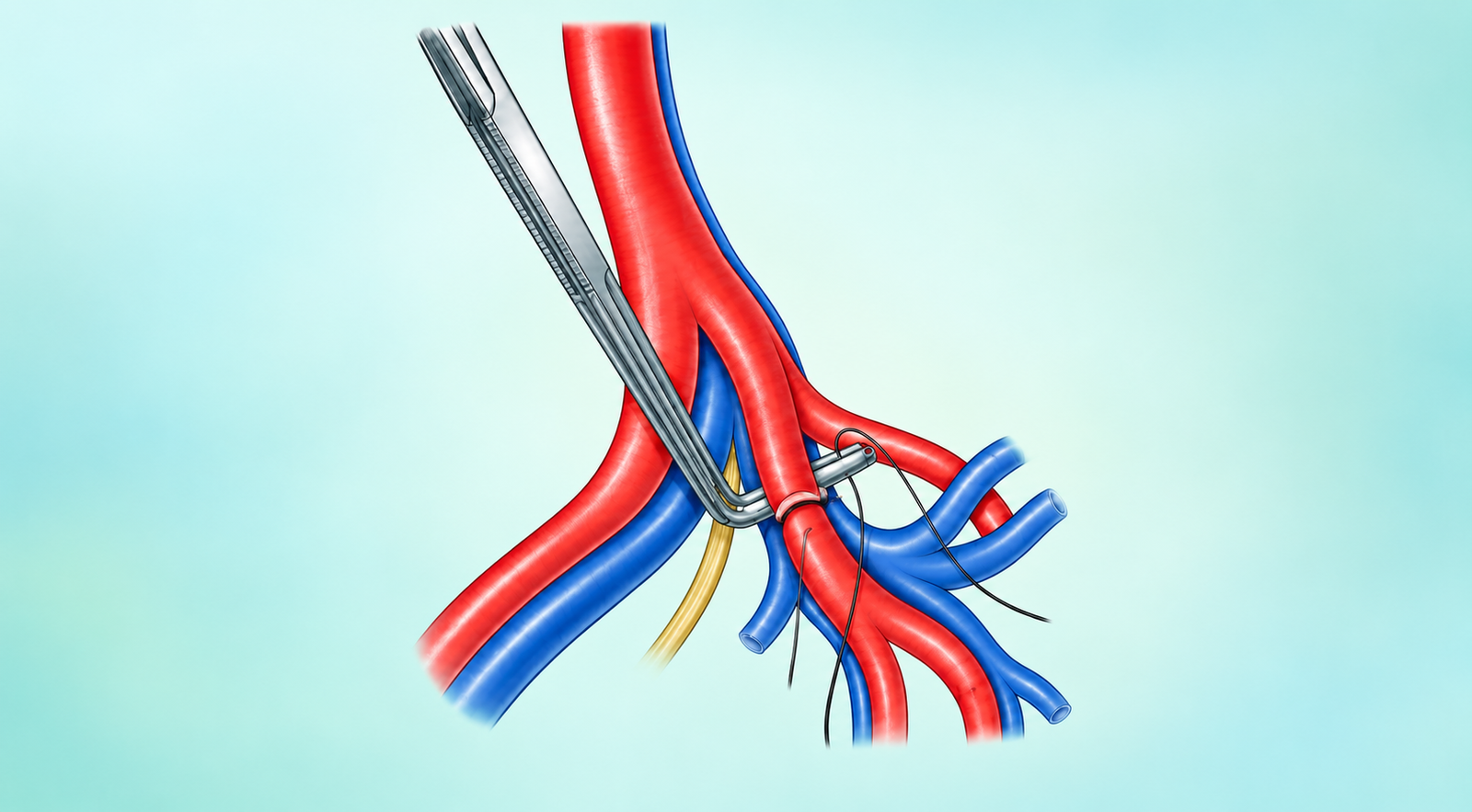
Advanced Surgical Training in Pelvic Haemorrhage Control
The Bilateral Internal Iliac Artery Ligation Training Program is a focused 3-day surgical program for qualified gynecologists, obstetricians, and surgeons involved in pelvic surgery and haemorrhage management.
The training focuses on pelvic vascular anatomy, surgical exposure, vessel identification, operative technique, and intraoperative decision-making, helping participants understand the role of internal iliac artery ligation within the management of severe pelvic haemorrhage.
Surgical Training Approach
Understand → Identify → Expose → Control → Manage
The program combines anatomical teaching with operative demonstrations, case discussions, and supervised clinical exposure. Emphasis is placed on understanding the anatomy before proceeding to the surgical steps and recognizing structures that require careful protection.
Core Training Areas
Pelvic Vascular Anatomy
- Internal iliac artery and major branches
- Pelvic vascular landmarks
- Relationship with the ureter, veins, and surrounding structures
- Pelvic collateral circulation
- Anatomical variations relevant to surgery
Indications & Surgical Decision-Making
Participants review the role of internal iliac artery ligation in severe obstetric and gynecological haemorrhage, including situations where escalation to surgical vascular control may be appropriate.
Case-based discussions address:
- Assessment of ongoing pelvic bleeding
- Selection of haemostatic strategies
- Timing of surgical intervention
- Integration with other haemorrhage-control measures
- Decision-making in difficult operative situations
Operative Technique
Training covers the principal steps involved in the procedure, including:
- Surgical exposure of the pelvic sidewall
- Identification of the internal iliac artery
- Safe dissection and vessel isolation
- Identification of relevant anatomical structures
- Principles of bilateral vessel ligation
- Protection of adjacent structures
- Assessment of haemostatic effect
- Management of operative difficulties
Clinical & Operative Exposure
Participants are introduced to the procedure through step-by-step demonstrations, operative observation, and supervised participation where an appropriate case is available.
The training progression follows:
Observe → Understand → Assist → Participate Under Supervision Under Supervision → Review
Any practical participation is determined by case suitability, patient safety, institutional protocols, individual competence, and faculty assessment.
Participants may also propose a relevant case from their own practice, subject to prior clinical evaluation, hospital approval, informed consent, and faculty acceptance.
Complications & Surgical Safety
Because the internal iliac vessels lie in close proximity to important pelvic structures, the program places particular emphasis on safe anatomical dissection.
Training includes recognition and prevention of:
- Vascular injury
- Venous bleeding
- Ureteric injury
- Injury to adjacent pelvic structures
- Inadequate vessel control
- Postoperative complications
3-Day Training Structure
Day 1 - Anatomy & Clinical Decision-Making
Pelvic vascular anatomy, internal iliac artery anatomy, indications, haemorrhage-control principles, and case-based surgical planning.
Day 2 - Operative Technique
Surgical exposure, identification of anatomical landmarks, vessel isolation, ligation technique, and operative demonstrations.
Day 3 - Clinical Integration
Live operative exposure where available, supervised participation in suitable cases, complication management, postoperative considerations, and case review.
Learning Outcomes
By the end of the program, participants should be able to:
- Identify the relevant pelvic vascular anatomy
- Understand the indications for internal iliac artery ligation
- Plan the operative approach in appropriate cases
- Recognize important anatomical structures during dissection
- Understand the principles of bilateral vessel ligation
- Identify potential operative complications
- Integrate the technique into broader pelvic haemorrhage management
Who Should Attend?
The program is intended for qualified surgical professionals involved in obstetric, gynecological, or pelvic surgery, including:
- Obstetricians & Gynecologists
- Gynecologic Surgeons
- General Surgeons involved in pelvic procedures
- Senior Residents and Fellows in Obstetrics & Gynecology
- Surgeons seeking focused training in pelvic haemorrhage control
Program Details
- Duration: 3 Days
- Location: Delhi
- Format: Intensive Clinical & Surgical Training
- Focus: Internal Iliac Artery Ligation & Pelvic Haemorrhage Control
- Training: Anatomy, Case Discussions, Operative Demonstration & Supervised Clinical Exposure
- Batch Size: Limited
- Certification: Certificate of Completion
Advance Your Pelvic Haemorrhage Management Skills
Develop a structured understanding of pelvic vascular anatomy, internal iliac artery ligation, and operative haemorrhage-control principles through focused surgical training and faculty-guided clinical exposure.
APPLY NOW